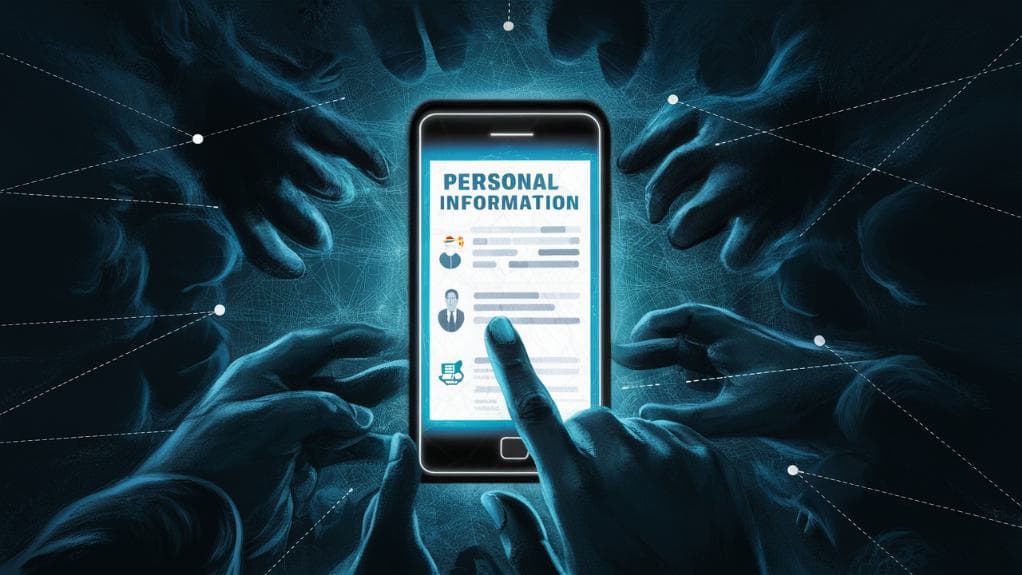
Privacy Risks of Phone Number Search Apps?
Key Takeaways:
- Phone number search apps risk privacy. They collect and share personal data covertly. This enables identity theft, making information vulnerable to hackers.
- Stalkers may find addresses or sensitive details. Apps often sell data to third parties. Legal protections are weak.
- Protect yourself: limit online sharing, use strong authentication, check digital footprint regularly.
- Be cautious with app permissions. Read privacy policies. Understanding risks safeguards personal information.
Data Collection Practices
Many mobile number lookup services utilize intrusive information gathering methods that may compromise personal privacy. These platforms amass substantial amounts of private data, often including names, locations, and social media accounts, frequently without explicit user permission.
They employ automated techniques to compile comprehensive profiles by aggregating information from multiple sources like government records and online listings.
The terms of service for such platforms are typically vague, making it challenging to discern what sensitive details are being collected and their intended use. Your contact information could appear in search results without prior approval, potentially leading to unwanted communication or stalking.
Numerous platforms also engage in selling user data to external parties, elevating the risk of identity fraud. Exercise caution when utilizing these services and thoroughly examine their information gathering practices to safeguard your personal data.
Identity Theft Vulnerabilities
Sensitive personal data becomes vulnerable when aggregated and made publicly accessible. Names, addresses, and associated accounts can be exposed without an individual’s knowledge or consent. This consolidation of information from multiple sources creates opportunities for malicious actors to exploit personal details.
Many people are unaware their own data is being displayed publicly. The lack of robust security measures increases the risk of identity theft and fraud. Numerous cases have originated from information obtained through centralized data repositories.
Once contact information becomes widely available, it can be leveraged for targeted phishing attempts and social engineering attacks, potentially compromising financial accounts and other sensitive systems.
To mitigate risks:
- Limit sharing of personal contact information online
- Regularly audit what data is publicly available about you
- Take action to remove or secure exposed information
- Remain vigilant about protecting privacy in digital environments
Stalking and Harassment Concerns
Phone number lookup services present significant risks to personal safety and privacy. These tools can be exploited by individuals with malicious intent, providing easy access to sensitive information tied to phone numbers. Research indicates that nearly one-third of individuals who experience stalking report their pursuers using technological means to monitor them. These individuals may use phone number lookup tools to gather personal details about their targets, such as home addresses, work locations, and daily routines, posing a serious threat to their safety. Additionally, these services may also lead to an invasion of privacy, as they can reveal personal information without the individual’s consent or knowledge. Therefore, it is important for individuals to be cautious when sharing their phone numbers and to consider the potential risks associated with phone number lookup tools.
Potential dangers include:
- Unauthorized access to residential addresses
- Unwanted discovery of social media accounts
- Anonymous communication from unknown sources
- Heightened feelings of vulnerability and insecurity
- Gaps in legal frameworks to address technology-aided harassment
These services can embolden those with harmful intentions by providing anonymity and multiple avenues for contact. The majority of persistent harassers employ various tactics, including calls from unidentified numbers, and these tools facilitate such behavior.
Victims often find themselves exposed, as their personal information becomes readily accessible without their knowledge or consent, leaving them susceptible to potential harm.
Unauthorized Information Sharing
Unauthorized dissemination of personal details poses a substantial risk to individual privacy. Digital platforms often gather and store sensitive information and usage patterns, which may be shared with external entities without explicit authorization.
Many services generate revenue by selling user data to marketing firms, increasing the likelihood of unintended information spread. Ambiguous terms of service agreements may lead to inadvertent consent for extensive data sharing, with limited transparency regarding information usage.
Security breaches involving these platforms can result in significant unauthorized exposure of personal information, exacerbating privacy concerns and increasing vulnerability to identity theft and fraudulent activities.
Some services compile data from publicly available records and social networks, potentially revealing sensitive details about individuals. To safeguard personal information, it’s advisable to scrutinize platform permissions and consider alternatives that prioritize data protection measures.
Legal and Ethical Implications
Navigating the intricate web of considerations surrounding contact lookup services requires careful thought.
These platforms often tread a fine line between utility and potential overreach, raising concerns about data protection compliance. Users may inadvertently contribute to privacy infringements and unauthorized dissemination of personal details.
Key issues to ponder include:
- Data aggregation without explicit permission
- Potential misuse for unwanted pursuit or intimidation
- Disclosure of confidential personal information
- Ambiguity in data ownership and management
- Enabling identity fraud
Regulatory oversight is intensifying as authorities aim to safeguard consumer privacy in this rapidly changing landscape.
Users should remain cognizant of the risks to their own information and the moral implications of accessing others’ data covertly.
It’s crucial to prioritize privacy and weigh the potential repercussions before engaging with such services.
Protective Measures for Users
Safeguarding personal information requires proactive steps in today’s interconnected digital landscape. Conduct regular online searches of your contact details to identify any unauthorized exposure.
Implement additional security layers like multi-factor authentication across all accounts. Consider using alternative communication methods for online transactions to shield your primary contact information from data aggregators and lookup services.
Regularly review and adjust privacy settings on social networking platforms to ensure contact details remain private. Before granting access to your information, carefully examine the privacy policies and terms of service for mobile applications.
This precaution helps mitigate potential misuse of your data. Adopting these protective strategies significantly reduces the risk of personal information exposure through various lookup tools and services.
Maintain constant vigilance and actively manage your digital presence to preserve privacy and autonomy in the online sphere.
Conclusion
You’ve learned about the risks of phone number search apps. To protect yourself, be cautious about sharing your number online. Use privacy settings on social media and opt out of data broker sites when possible. Consider using a separate number for public listings. Stay informed about data privacy laws and report any misuse of your information. Remember, your phone number is a key to your personal data, so guard it carefully. Additionally, familiarize yourself with the legal limits on phone searches to understand your rights and when law enforcement can access your information. Some jurisdictions require a warrant for phone data, which offers additional protections. By staying vigilant and utilizing available privacy tools, you can reduce the risk of your phone number being exploited.